Criteria Cognitive Aptitude Test (CCAT)
I took the Criteria Cognitive Aptitude Test (CCAT), and I think I did about average. It was tough to prepare for and even harder to finish. I practiced as much as possible. Once you get the email, you have five days to take the test, which doesn’t feel like much time. For me, I got the email on a Tuesday, squeezed in some studying when I could, and took the test on Saturday.
If you don’t know what that is, like I did not a week ago, here are some details.
The CCAT
The test features a notoriously strict format and specific testing rules:
- Questions: 50 multiple-choice questions
- Time Limit: 15 minutes
- Calculator: Not allowed (mental math and scratch paper only)
- Average Score: 24 out of 50
- Scoring Speed: Answering 20–28 questions correctly is considered strong, though the average person finishes only about half the test
The exam covers three distinct categories designed to test how quickly you can learn and apply new concepts:
- Math & Logic: Word problems, basic algebra, number series, and calculating averages or percentages (e.g., finding proportions and ratios).
- Verbal Reasoning: Identifying synonyms/antonyms, sentence completions, and logic-based analogies.
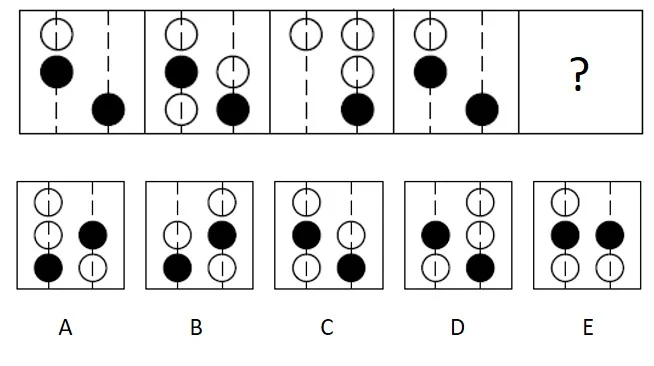
- Spatial Reasoning: Mentally manipulating geometric shapes, identifying patterns, and spatial problem-solving.
Finished All 50 Questions
I finished the test with 6 seconds left, but that was just because I used a common strategy. I set a timer, gave myself 18 seconds for each question, and if I wasn’t ready, I guessed and moved on. So I’m not really sure how I did.
Study
To prepare for a test like this, I recommend practicing with a timer. You need to get used to thinking while the clock is ticking. Some questions, especially the Spatial Reasoning ones, really need time to process. I actually enjoy spatial reasoning and got hooked on those puzzles, so now I do them for fun. But during the test, the timer adds pressure. Sometimes you get a pattern you have never seen before, and with less than 20 seconds to solve it, it can be stressful. Maybe some people enjoy that challenge, but I definitely do not.
My Experience
So of course, I was a complete mess during the test. When I was preparing, I practiced the problems without a timer because I just couldn’t get it right with one. Later, I tried adding the timer back in, but it never went well, either in practice or on the actual test. I don’t handle being rushed very well. I’m a deep and thoughtful person, and when I have to hurry, it’s like my brain just forgets everything. Not ideal, man. Not ideal.
Thoughts
I get why, with so much AI around, employers want a fast way to check if someone will do well in a job. I really do. I’ve worked in hiring and I’ve seen what happens when you trust a resume and an interview but overlook a few warning signs. The culture takes a hit, the team struggles, and the person who gets the job but isn’t a good fit ends up unhappy too. Still, I don’t think this is the answer, even if it’s heading in the right direction.
Good and Bad & The Point
If you expect someone to do math under pressure, think deeply in a fast-paced setting, connect well with others, and get tasks done, it almost feels like you’re looking for a robot. I’m not sure how many people can do all that, but this test will definitely find them.
On a serious note, I do think the test helps find the right people for certain jobs. At first, I wasn’t sure, but after reading the introduction and taking the test, I felt more comfortable and less stressed about making mistakes. I believe the test will highlight my strengths, but I’m not a fan of the timer.
The timed aspect of the test is where I struggle. Some people, like me, don’t do well with strict time limits. If we are timed, it needs to allow for the ways we’ve learned to manage in a busy world. Eighteen seconds just isn’t enough for how I think.
I think that’s the point. Different roles require different levels of this skill. Some jobs need people who can move and think quickly. It really comes down to finding the right fit, and not taking it personally if you aren’t chosen. The hiring team knows what they need, and if it’s not you or me, it’s not a reflection on us.
One thing I appreciate about Automattic, where I work, is that we have a trial period. It gives us another way to evaluate candidates. The CCAT is just a starting point, and I think it needs to be combined with other steps. I believe the CCAT alone shouldn’t decide who gets hired. I’ll always support trials or longer interview processes because finding the right person for your company and culture is so important.
Resources
There are so many resources out there that it’s hard to list them all. I recommend using Claude or whichever AI tool you like best to help you find what you need. That’s what worked for me. Personally, I found videos the most helpful, but everyone has their own preferences. Oh, and don’t pay for anything, there is enough free stuff out there that you really don’t have to. My own personal opinion, but I don’t see a benefit in paying for what is free. Some YouTubers make you suffer through commercials every minute and a half, but it’s still free!
Don’t cheat. While I did come across a way to cheat while looking for prep tips, I wasn’t searching for it on purpose. There’s a thread online where many people are using a pretty obvious method to see the questions ahead of time. For all the reasons I mentioned earlier, please don’t cheat. Integrity is really important. Trust the process. Like with any shortcut, there’s always a risk of getting caught, but I hope doing the right thing is reason enough to stay honest.