RF Hacking
A while back, I posted about how deep I was getting into my Flipper Zero and HackRF One H4M. I bring my Flipper Zero with me everywhere and have been using the IR blaster and the ESP32 + Marauder setup to do some interesting things with IP networks.

What I don’t take with me because it’s bigger and can get me into a lot more trouble is my HackRF One H4M. This thing does so much, and I have hardly scratched the surface of what it can do, mostly because I am such a rule-keeper and overly cautious when hacking.


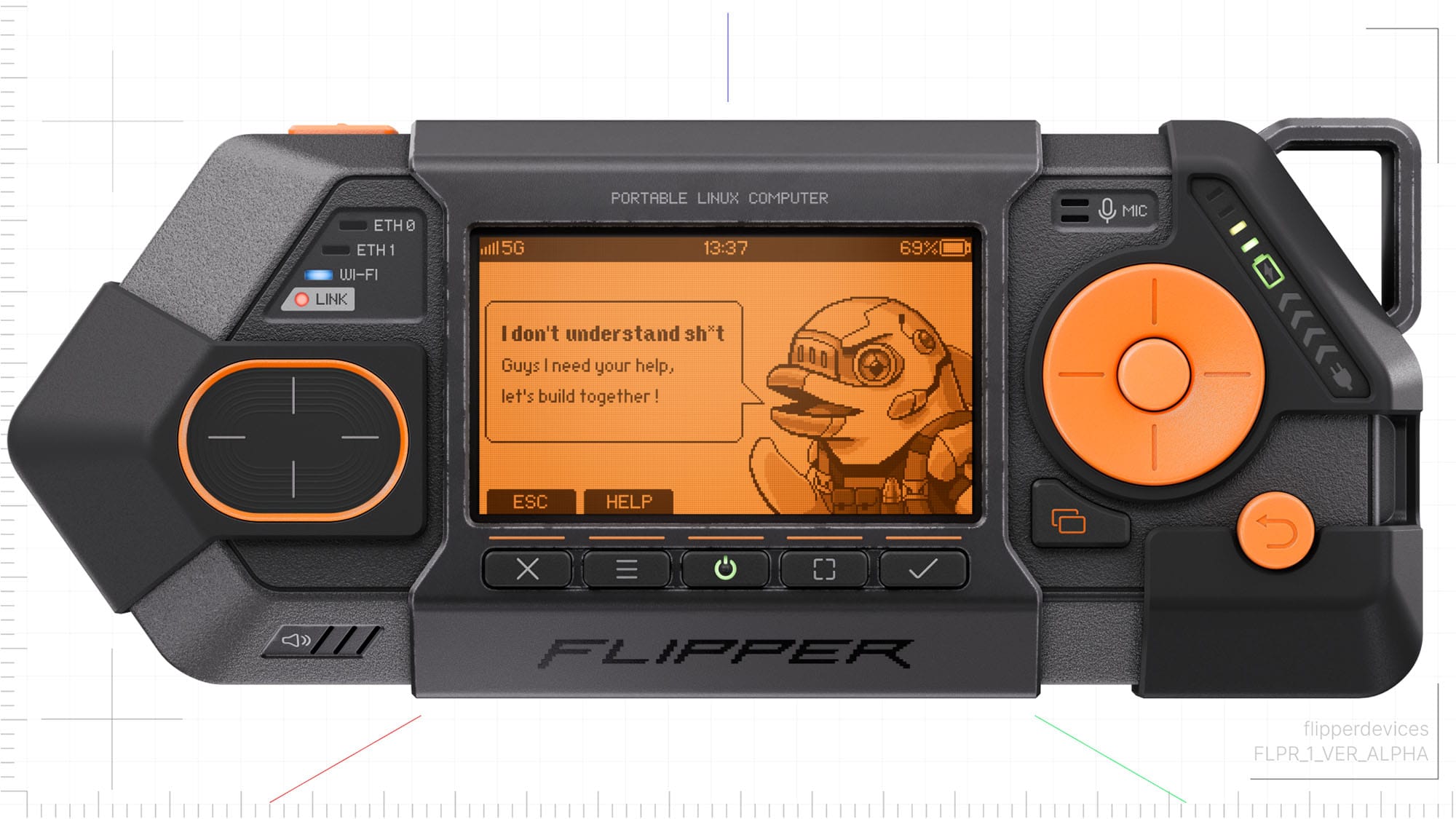
Flipper One
This news from Flipper is exciting.
From the Flipper Blog:
Flipper One isn’t an upgrade to Flipper Zero — it’s a completely different project with its own goals. Flipper One is an open Linux platform you can build almost anything on: from a 5G-enabled IP network analyzer to an SDR-powered radio signal analyzer with local AI. We focused a lot on the hardware expansion system. You can connect high-speed modules to Flipper One over PCI Express, USB 3.0, and SATA interfaces. Add an SDR, a fast SSD, or a cellular modem — just plug in the right module.
Flipper One comes with several network interfaces: 2x Gigabit Ethernet, USB Ethernet (5 Gbps), and Wi-Fi 6E (2.4/5/6 GHz). You can add 5G connectivity by plugging in an M.2 modem. That means you can use Flipper One as a router, a VPN gateway, or a bridge between wired and wireless networks.
This is the one device I’ll carry everywhere. I cannot wait for this to be in my hands.
What it does

Flipper Zero and Flipper One are completely different projects built for different tasks. The easiest way to think about it is in terms of networking layers:
- Layer 0 — Offline point-to-point access-control protocols: NFC, low-frequency RFID, Sub-1 GHz radio, Infrared, wired protocols like iButton, UART, SPI, I²C. Based on a low-power microcontroller.
- Layer 1 — Everything that’s IP-connected: Wi-Fi, Ethernet, 5G, and satellite. It’s all about networking, data transfer, and high-performance computing. Running on powerful hardware and an open Linux toolkit — enough computing power to handle SDR and local AI.

Getting Involved
- Software/UI — FlipCTL is their UI framework for the platform. Embedded Linux UI dev, that’s a natural fit for a developer.
- Developer Portal — Browse docs.flipper.net/one and filter by “help wanted” tags. Low barrier to start, good way to see what’s actually needed before committing to anything bigger.
- Documentation — If you want to contribute without diving deep into C or kernel work, doc contributions are always undersupplied on hardware projects like this.
Linux-related open tasks:
- TEE OS for RK3576 — porting OP-TEE (Trusted Execution Environment) to the RK3576 chip. Deep embedded security work — very specialized.
- DDR Memory Init — replacing a proprietary blob that initializes RAM at boot. Active discussion (25 comments), but requires reading hardware specs and writing very low-level init code. High difficulty.
- RK3576 NPU Support — adding the neural processor to mainline Linux/Mesa. GPU/NPU driver work.
- Hardware Video Decoding — getting hardware video decoding working in the mainline kernel (it currently only works in Rockchip’s BSP fork). Needs kernel driver dev.
- RK3576 Boot Flow Documentation — document how the RK3576 boots. If you’ve worked with Rockchip or ARM SBCs before, this could be a solid entry point with real impact and lower barrier.